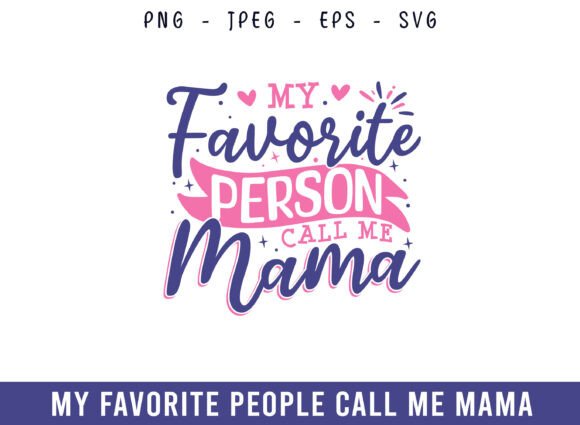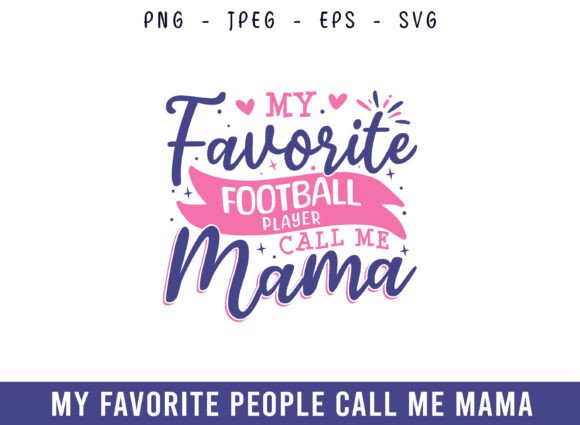
My Favorite Football Player Call Me Mama
As someone who’s stitched hundreds of custom designs for clients—from boutique baby boutiques to Etsy shops selling personalized sweatshirts—I opened My Favorite Football Player Call Me Mama with quiet curiosity, not hype. I wasn’t looking for “cute.” I was looking for workable. Does it hold up under thread? Does it translate emotionally when stitched—not just on screen? And most importantly: would a customer proudly wear or gift this, knowing it came from a small maker like me?
Last week, I used it to embroider a navy cotton tote for a client’s Mother’s Day pop-up shop—her son plays high school football, and she wanted something warm, personal, and unmistakably handmade. No clipart energy. No overdesigned clutter. Just authenticity, stitched cleanly.
A First Impression That Feels Like Home
My Favorite Football Player Call Me Mama lands with gentle confidence. It’s not shouting—it’s smiling. The layout balances soft curves and grounded lettering; the “Mama” anchors the design while the football motif (subtle but clear) adds context without dominating. There’s no aggressive sport branding here—no helmets, no roaring mascots, no jersey numbers. Instead, it leans into warmth, identity, and quiet pride. That makes it unusually versatile: equally at home on a linen tea towel in a nursery as it is on a heavyweight cotton apron behind a coffee bar.
The vector construction—100 clean shapes, fully resizable—means scaling isn’t guesswork. I resized it smoothly from 3.2" wide (for a baby onesie chest placement) to 5.8" (centered on a crewneck sweatshirt), with no jagged edges or collapsed spacing. That matters when you’re batching orders for a craft fair and can’t afford redraws.
Where It Shines—and Where You’ll Want to Pause
This design excels in custom apparel and personalized gifts where emotional resonance matters more than flash. On a medium-weight cotton sweatshirt? Crisp satin-stitched outlines and balanced fill stitch areas held beautifully—even across the curved shoulder seam, thanks to thoughtful spacing between letters and icon. On a lightweight tea towel? I added light tear-away stabilizer and reduced stitch density slightly in the “Mama” curve—no puckering, no shadowing.
It also works well for embroidered patch production. The clean boundaries and moderate detail level mean clean cut edges and easy peel-away backing. I ran a test batch on twill fabric with heat-activated adhesive backing—no fraying, no distortion during iron-on application.
But here’s where attention pays off: small hoop sizes and textured fabrics demand planning. The football shape sits close to the baseline of “Mama,” so if you’re stitching on a thick terry cloth towel or a ribbed knit cap, check clearance before hooping. Likewise, the interior details—like the subtle laces on the football—are charming on screen but can blur on stretchy fabric or with low-contrast thread. Test those laces on scrap first. If they vanish, simplify them manually or switch to a bolder outline stitch.
Design Integrity Meets Real-World Wear
What surprised me most was how My Favorite Football Player Call Me Mama elevated perceived value—not through complexity, but through intention. Customers didn’t just see “mom + football.” They saw care in kerning, respect for negative space, and typography that feels handwritten but never sloppy. That builds customer trust, especially for Etsy sellers and small shop products competing against mass-produced alternatives.
For commercial embroidery, it’s a smart asset: non-seasonal enough for year-round listings, yet timely enough for Mother’s Day, graduation, or end-of-season team gifts. I’ve already added it to three digital embroidery file bundles—one focused on sports moms, another on nursery decor, and a third for holiday gift collections. Its tone bridges generations: young moms wearing it on game day, grandmas gifting it to daughters, even teens choosing it for their own “Mama” tote.
Practical Notes Every Embroidery Designer Should Keep Handy
- Always test on scrap fabric first—especially when switching between dark and light backgrounds. The design’s contrast works well both ways, but thread color choice changes everything. Navy thread on black fabric? Too muted. Cream on oatmeal? Just right.
- Review stitch density before finalizing. Dense fills look rich on stable fabrics but can stiffen delicate knits. Lighten fill stitch % by 10–15% for baby clothes or lightweight tees.
- Confirm hoop size compatibility. While scalable, the full design fits comfortably in a 5x7 hoop—but if you’re using a 4x4 for smaller items, resize thoughtfully and check letter spacing integrity.
- Inspect small details like the football laces or inner curves of “Mama” in your embroidery software. Zoom in. Adjust pull compensation if needed.
- Test in black-and-white mockups. This design relies on shape and rhythm more than intricate linework—so if it reads clearly without color, you’re golden.
- Use proper stabilizer. Medium-cutaway for knits, light tear-away for stable wovens. Skip the no-backing route—this design benefits from structure.
- Verify licensing before selling finished items or bundling the digital embroidery file in craft business kits. The listing mentions commercial use potential, but always confirm scope directly with the creator.
Final Thought: A Design That Earns Its Place
My Favorite Football Player Call Me Mama isn’t flashy—but it doesn’t need to be. In a market flooded with overdesigned graphics and hollow trends, it stands out by being quietly, confidently human. It’s the kind of machine embroidery design that makes customers pause mid-scroll. That earns repeat orders. That gets framed, not folded away.
Whether you're stitching it onto a pillow cover for a new grandma, prepping a batch of tote bag designs for your craft fair booth, or building a cohesive line of holiday embroidery assets for your digital shop—this one earns its spot in your working library. Not because it’s perfect, but because it’s practically lovely: designed for real hands, real machines, and real people who love deeply—and want to say so, stitch by careful stitch.